




Move over bones — dental calculus is emerging as a new frontier in uncovering hidden elements of ancient diets.
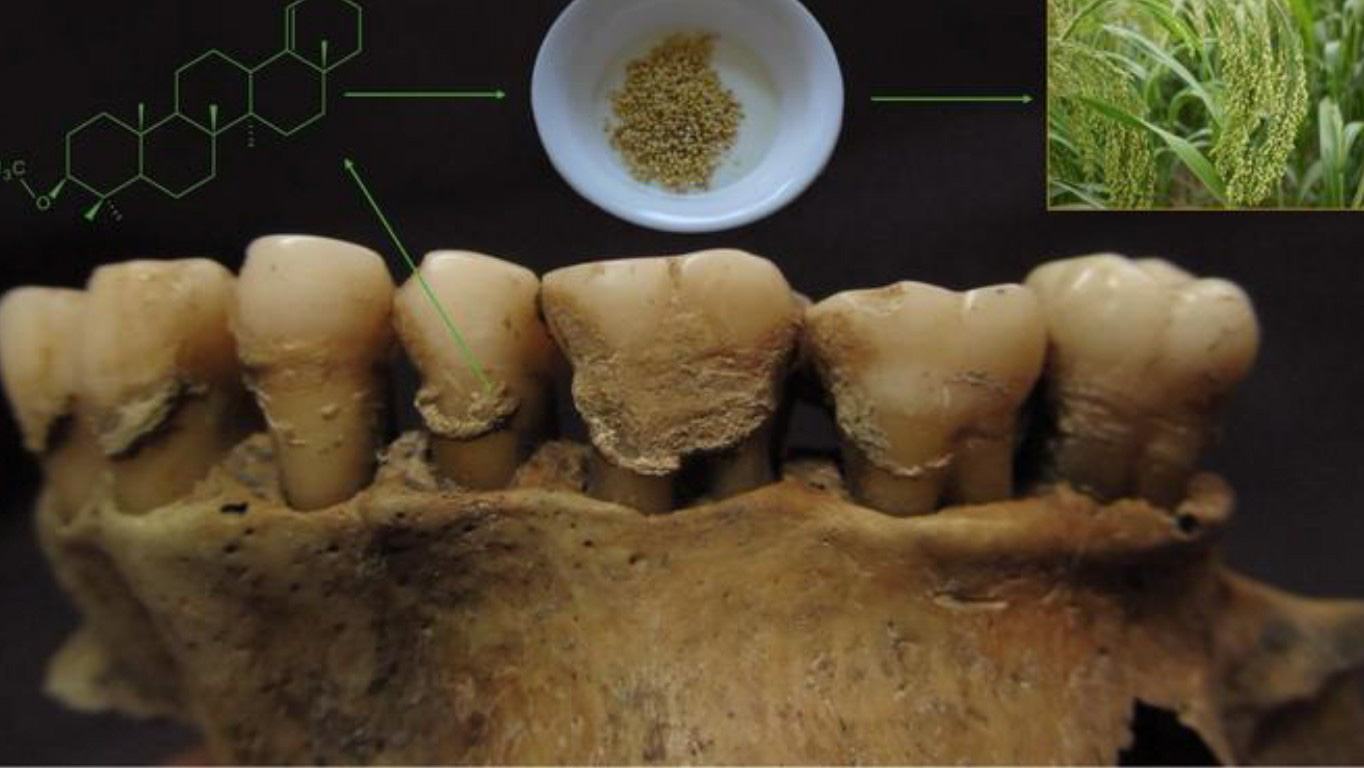
Using an advanced analytical method, researchers examining calcified dental plaque from medieval human remains at the Ostriv archaeological site in central Ukraine identified direct molecular evidence of millet consumption in people once thought unlikely to have eaten the crop.
Ostriv was part of the Kievan Rus’ cultural sphere and shaped by both Slavic and Baltic communities.
What allowed researchers to identify this previously “underrepresented food” is a novel biomolecular technique known as thermal desorption gas chromatography–mass spectrometry (TD-GC/MS).
Related: Fossil teeth allow researchers to show ‘drastic’ impact of Ice Age climate on European hunter-gatherers
The method detects minute chemical signatures preserved in dental calculus — specifically miliacin, a plant biomarker uniquely associated with broomcorn millet (Panicum miliaceum).
“Our findings demonstrate that even the smallest traces of millet leave molecular fingerprints in dental calculus,” said Dr. Shinya Shoda, co-lead author and a researcher at the Nara National Research Institute for Cultural Properties, in a press release. “This opens up an entirely new way to detect subtle dietary practices in the past.”
‘Immense potential’
The study, published in Scientific Reports, represents the first reported use of TD-GC/MS to reveal direct evidence of plant consumption from human dental calculus, offering archaeologists a powerful new tool to refine understandings of diet, migration and cultural interaction in the past.
“This study also holds immense potential for identifying biomolecules of other underrepresented plants of economic and medicinal importance,” said Prof. Giedrė Motuzaitė Matuzevičiūtė of Vilnius University.
Conventional approaches, such as stable isotope analysis of bone collagen, can fail to detect low-level consumption of C4 plants — crops such as millet that use a distinct photosynthetic pathway and leave characteristic carbon isotope signatures — because they typically require a substantial dietary contribution to register. To address this limitation, the researchers applied TD-GC/MS to dental calculus samples from individuals buried at the Ostriv site.
Related: Thanks to oxygen trapped in dino’s teeth, scientists recreate prehistoric air from millions of years ago
The research was supported by the European Research Council Consolidator Grant MILWAYS – Past and Future Millet Foodways (101087964), the Mitsubishi Foundation Research Grants in the Humanities awarded to Dr. Shoda, and the German Research Foundation–funded project Baltic migrants at the border of the Kievan Rus.
link
More Stories
Dental Services Market: Cosmetic Dentistry Demand, Smile Makeovers & Market Forecast
In HelloNation, Dental Expert Dr. Mark Luvisotto of Windsor, ON, Explains Services Covered Under the Canadian Dental Care Plan
Press Release: Durbin Announces $3.5 Million Federal Funding for Parkland College Dental Education Program