





For their safety, the whistleblowers featured in this exposé have been given pseudonyms. “Alex” and “Jesse”—staff members at St. Joseph’s Hospital—have bravely come forward to describe the heartbreaking reality of St. Joseph’s animal testing.
Inside a secret animal lab at St. Joseph’s Hospital in London, Ontario, researchers are performing disturbing medical experiments on hundreds of dogs, pigs, and rodents. Whistleblowers from inside the facility have bravely come forward to share shocking stories of animal suffering, and the lengths the hospital goes to prevent the public from learning about the secret dog lab.
Watch the Video
Hear directly from whistleblowers who witnessed the suffering firsthand. This powerful testimony exposes the horrifying cruelty inflicted onto animals in experiments conducted inside St. Joseph’s Hospital. It also reveals the emotional toll on staff.
What’s Happening Behind Closed Doors:
- Dogs deliberately given heart attacks lasting up to three hours by clamping arteries.
- Repeated tests during a painful recovery process.
- Animals showing troubling repetitive behaviours from isolation and trauma, such as pacing, tail sucking, and repeatedly dunking their faces in water.
- Dogs whimpering and screaming in pain during recovery.
- Researchers scan dogs and pigs with the same MRI machines used by human patients.
- Dead bodies of dogs, pigs, and rats stacked in biohazard barrels.
- Animal care staff are emotionally devastated when animals they bond with are killed.
The Experiments: Inside St. Joseph’s Animal Lab
“
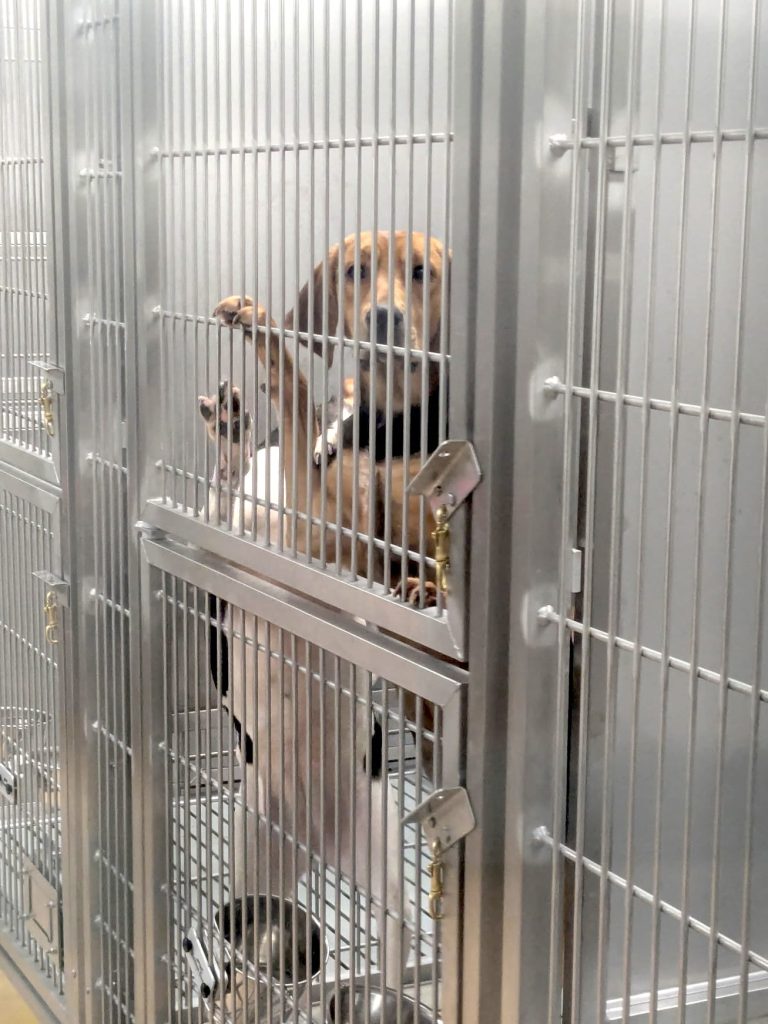
…That is the most traumatic thing I’ve ever seen. It’s 24-7 constant whimpering.
And [her cries] would not sound like regular dog cries. They would sound like a human screaming. It was really hard to hear.
”
—Alex, whistleblower
The Lawson Health Research Institute—St. Joseph’s official research arm—conducts the experiments. Hidden away in the secret lab, hundreds of dogs and pigs, and thousands of rodents have been subjected to horrific tests for decades.
Dogs—some as young as eight months—arrive from US breeders in unventilated vans, often covered in feces and vomit.
Once inside, dogs are subjected to cardiac resuscitation experiments. Researchers induce heart attacks lasting up to three hours using a surgically inserted snare to restrict blood flow. The dogs are scanned in the same MRI machine used on human patients. If a dog dies during the procedure, more are ordered to take their place. Those who survive often face a painful recovery—only to face a series of imaging tests and a final, fatal procedure so their organs can be collected.
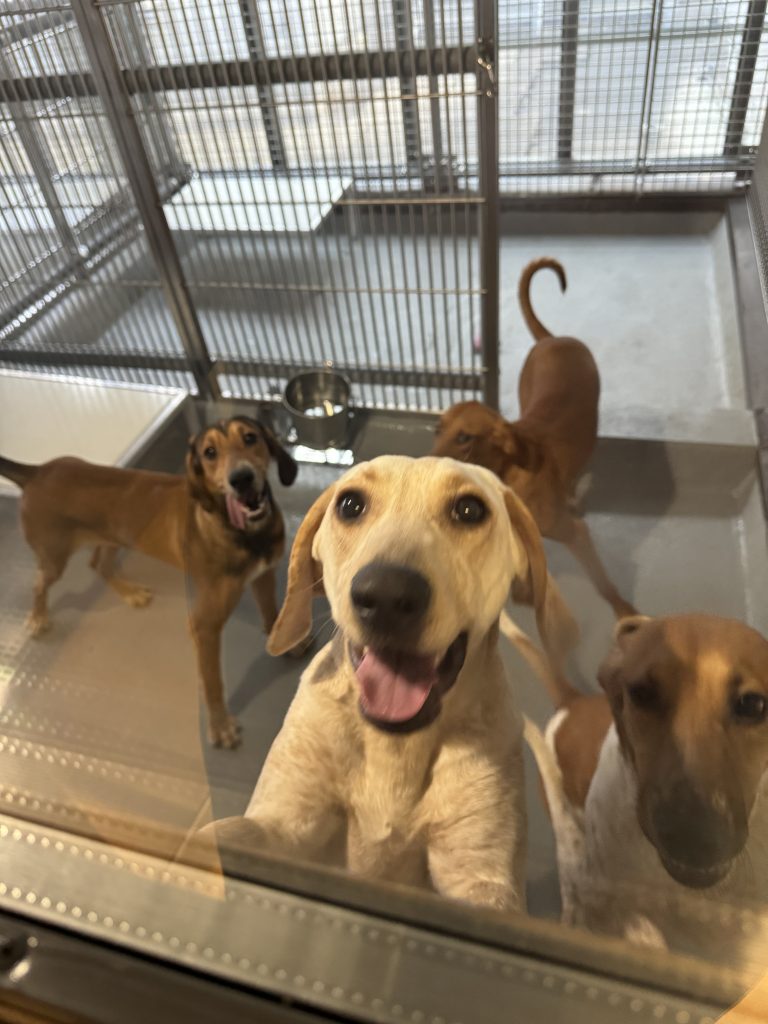
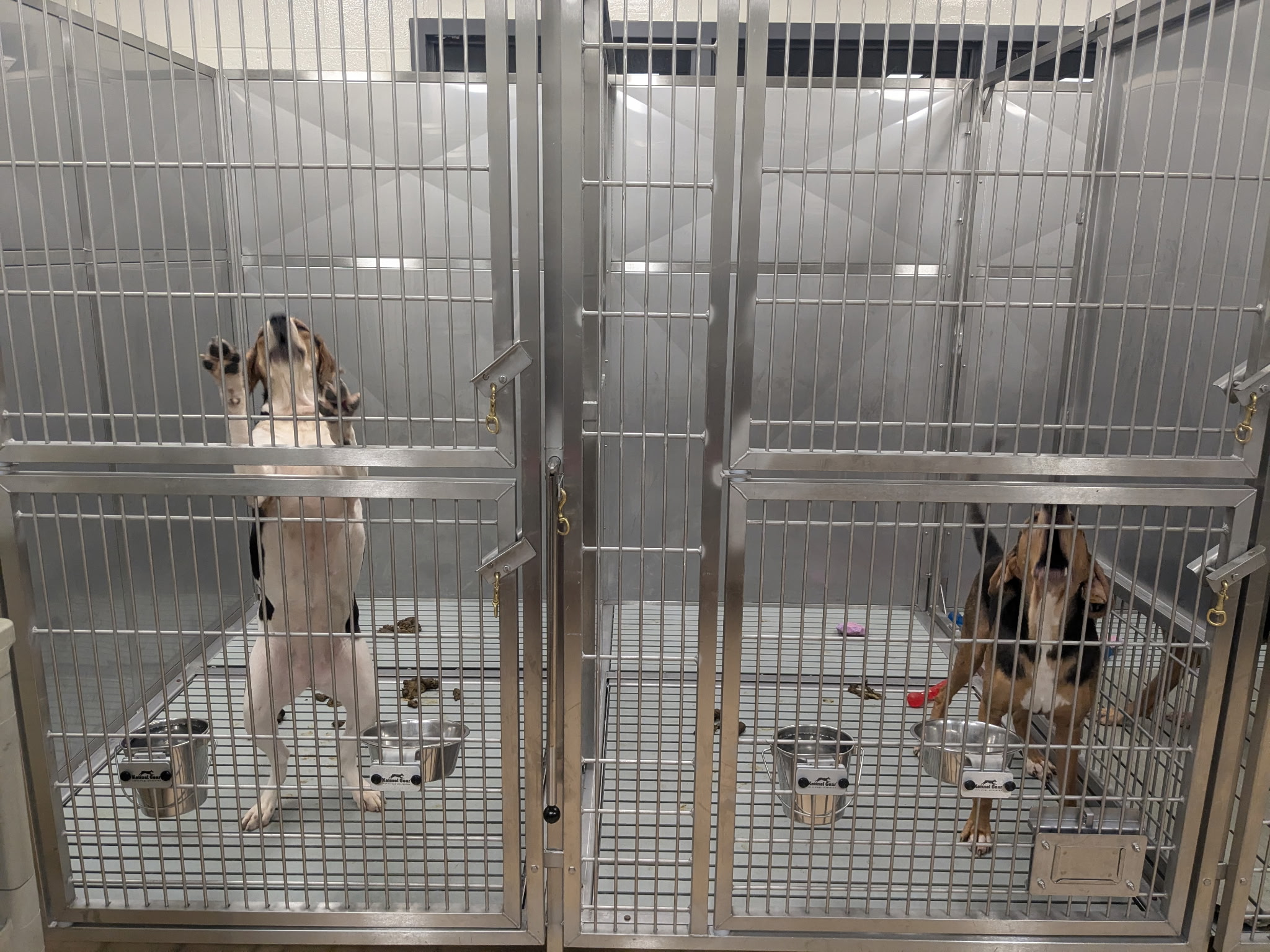
Meanwhile, the animals endure heartbreaking conditions. Dogs live in metal-barred cages with little enrichment or social interaction. Many develop stereotypies—abnormal repetitive behaviours likely brought on by the stress of confinement. They pace through their waste, submerge their faces in water buckets, or suck their tails raw.
“
Some dogs just run in circles until their enclosures are painted in feces.
”
—Jesse, whistleblower
It’s not only dogs who are used at St. Joseph’s. Pigs used in wound healing trials are isolated with large, open wounds down their backs, leaving some to injure themselves or wallow in their own waste.
“
They put more than a dozen holes on their backs… it’s truly horrifying to see.
”
—Alex, whistleblower
Staff Heartbroken by Routine Suffering & Killing
The cruelty of St. Joseph’s animal testing doesn’t end with the animals.
The researchers who design the experiments are often absent. It’s animal care staff that feed, comfort, and bond with the dogs on a daily basis.
“
These animals deserve someone to be sad that they’re dying.
”
—Jesse, whistleblower
Yet the same animal care staff must also kill the dogs—then return to their work as if nothing happened. This leaves a deep emotional toll on staff who have come to love the dogs.
“
They’re having potlucks on the same day they’re euthanizing these dogs […] The dogs don’t get a pizza party before you kill them.
”
—Alex, whistleblower
The physical facility is also built for secrecy. Staff are told not to throw dog food in the regular trash. Dogs are secretly delivered in covered cages through restricted access zones, with security guards standing watch. Their cries can sometimes be heard from public elevators, so music is played to drown out their barking. Windows are covered to keep the animals—and their suffering—out of sight.
Most patients and even other hospital employees have no idea animals are kept in the secret lab.
The Better Way: Alternatives to Animal Experimentation
Despite claims that these tests are necessary to improve imaging techniques, experts dispute their scientific value. Dr. Charu Chandrasekera, founder and executive director of the Canadian Institute for Animal-Free Science, points out that dogs and humans have such different cardiac anatomy and physiology that dog-based experiments are an unreliable model for human health.
“
Dogs and humans differ significantly in cardiac anatomy and physiology […] Even the U.S. National Institutes of Health recently ended dog experiments on its own campus.
”
—Dr. Chandrasekera, executive director of Canadian Institute for Animal-Free Science
In May 2025, the US National Institutes of Health officially closed its final in-house beagle lab. This decision reflects the growing consensus that animal testing is outdated, unreliable, and cruel, as better alternatives now exist.
Meanwhile, Canada is moving in the opposite direction. Dog use in Canadian science surged 94% between 2020 and 2023, rising from 8,338 to 16,151 dogs. By comparison, the European Union and Norway used only 8,709 dogs combined in 2022.
Unlike many countries, Canada has no federal laws to regulate animal research. Instead, the Canadian Council on Animal Care—a non-profit body—”oversees” animal experimentation by setting voluntary guidelines, not legally enforceable standards.
In 2023, Canada finally took a major step forward by passing two laws to protect animals in research: a ban on cosmetic animal testing and legislation to phase out toxicity testing. But more work needs to be done to end this use of animals in experiments—including fast-tracking the adoption of animal-free testing methods.
“
When 90% of animal-tested drugs fail in humans, change isn’t optional.
”
—Dr. Chandrasekera, executive director of Canadian Institute for Animal-Free Science
Across the globe, researchers are turning to cruelty-free, human-relevant technologies that offer greater precision and compassion. These include MRI and PET studies with human volunteers, advanced computer simulations, and organ-on-a-chip systems that replicate real human biology.
Animal-free science is well underway. But many research institutions, including St. Joseph’s, have yet to follow.
Animals in St. Joseph’s Experiments Should Be Rehomed
St. Joseph’s Hospital has the option to rehome dogs after experiments—but repeatedly chooses not to.
Staff members, including facility managers, have adopted animals in the past. The Beagle Alliance—a Canadian organization that specializes in post-lab rehabilitation—has formally offered to assist with rehoming. Despite this support, the hospital continues to kill the dogs once testing is complete. In one case, a dog was reportedly considered for adoption, only for the decision to be abruptly reversed—leaving staff devastated.
“
Everyone got their hopes up. All the staff loved this dog so much […] Then one day they were just like, ‘We’re actually just going to kill her anyways.
”
—Jesse, whistleblower
The Beagle Alliance has successfully placed dozens of former research beagles into loving homes internationally. In May 2025, they announced that they had safely rehomed the first two beagles released from a Canadian testing facility. It’s a hopeful sign of what’s possible for the dogs used for research at St. Joseph’s.
Take Action: #SaveStJo’sAnimals
Animal Justice and The Beagle Alliance are urging St. Joseph’s Hospital to spare these dogs and allow them the second chance they deserve.
Urge St. Joseph’s Hospital to end experiments on animals and give survivors a chance at adoption.
Have Information About Animal Cruelty in Canada?
Your voice matters. If you’ve witnessed animal suffering in a lab, medical facility, or any other setting, you can help shine a light on hidden, routine cruelty. Email us confidentially at [email protected] or learn more about our tipline here. Your courage could help save lives.
link
More Stories
Research Fellow in Health Services job with FLINDERS UNIVERSITY
Sunnybrook Health Sciences Centre Receives $10 Million Gift To Expand OCD Research, Education And Treatment
On Research: The importance of flexibility during times of crisis