




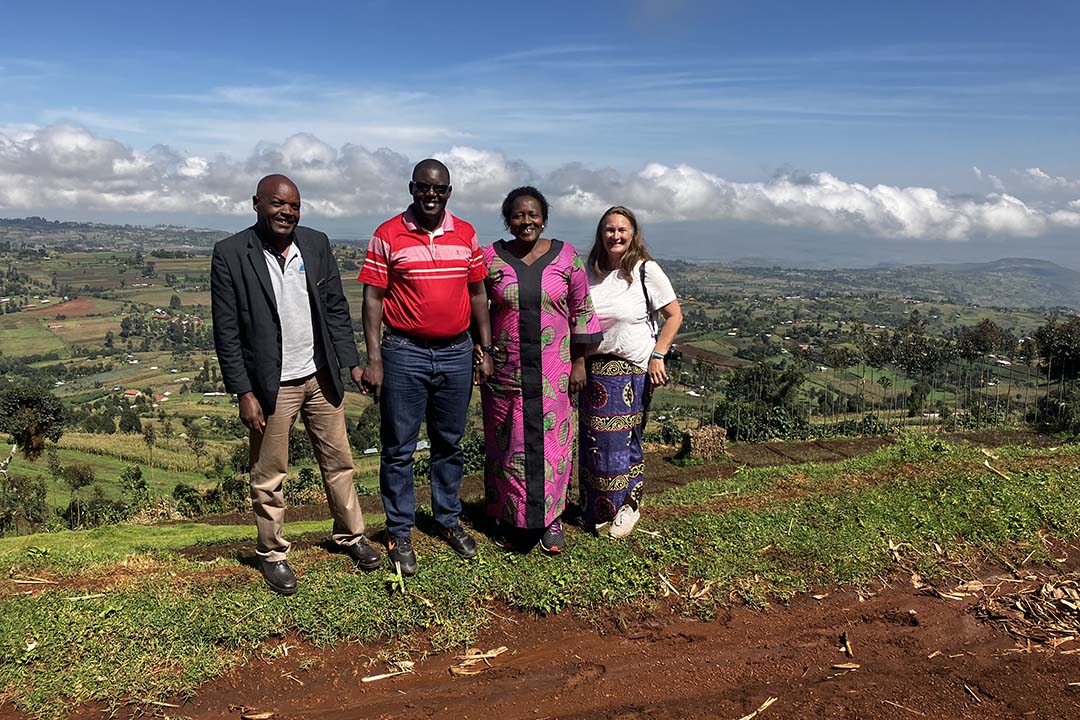
Dr. Corinne Schuster-Wallace (PhD), a professor in USask’s Department of Geography and Planning and the executive director of the Global Institute for Water Security (GIWS), is the principal investigator (PI) on a project exploring the connections between physical and social environments and maternal well-being in communities in Africa and at home in Saskatchewan.
The five-year project recently received more than $1.3 million from the Canadian Institutes of Health Research (CIHR) and aims to create a tool which can be used to evaluate the maternal well-being of Indigenous women in rural communities.
“Livelihood, housing, food security, safety—you can’t get there without thinking about water and local water security,” Schuster-Wallace said.
The research team will develop a measurement tool that will include a series of indicators and criteria developed over the course of the research project. The indicators of that measurement tool will be focused on areas of maternal well-being in communities, including water security, food security, social networks, agency and health care.
The goal is that the tool can be used universally by communities or by local governments and organizations to assess maternal well-being. By using indicators developed within communities, Schuster-Wallace and her team hope their tool can help show communities where there are needs affecting maternal well-being that can be filled to improve community health and well-being, especially for women, girls and their babies.
Schuster-Wallace highlighted the importance of water, sanitation and hygiene (WASH) for human health, as highlighted by the World Health Organization (WHO). By focusing the idea of WASH from a maternal health perspective, Schuster-Wallace said issues around community water security become much more evident.
As an example, Schuster-Wallace pointed to the idea of women and girls having to fetch water for their households. If that water is further away, or if there are conflicts over accessing fresh water, that is a detriment to their health that can be measured. Limited access to water can also mean less food can be cooked safely, which is another indicator for health and well-being.
“It’s about water and nutrition, water and sanitation, water and livelihoods,” she said. “We started looking at maternal health outside of the health care system and realized there’s a broader context of maternal well-being.”
link
More Stories
Research Fellow in Health Services job with FLINDERS UNIVERSITY
Sunnybrook Health Sciences Centre Receives $10 Million Gift To Expand OCD Research, Education And Treatment
On Research: The importance of flexibility during times of crisis