




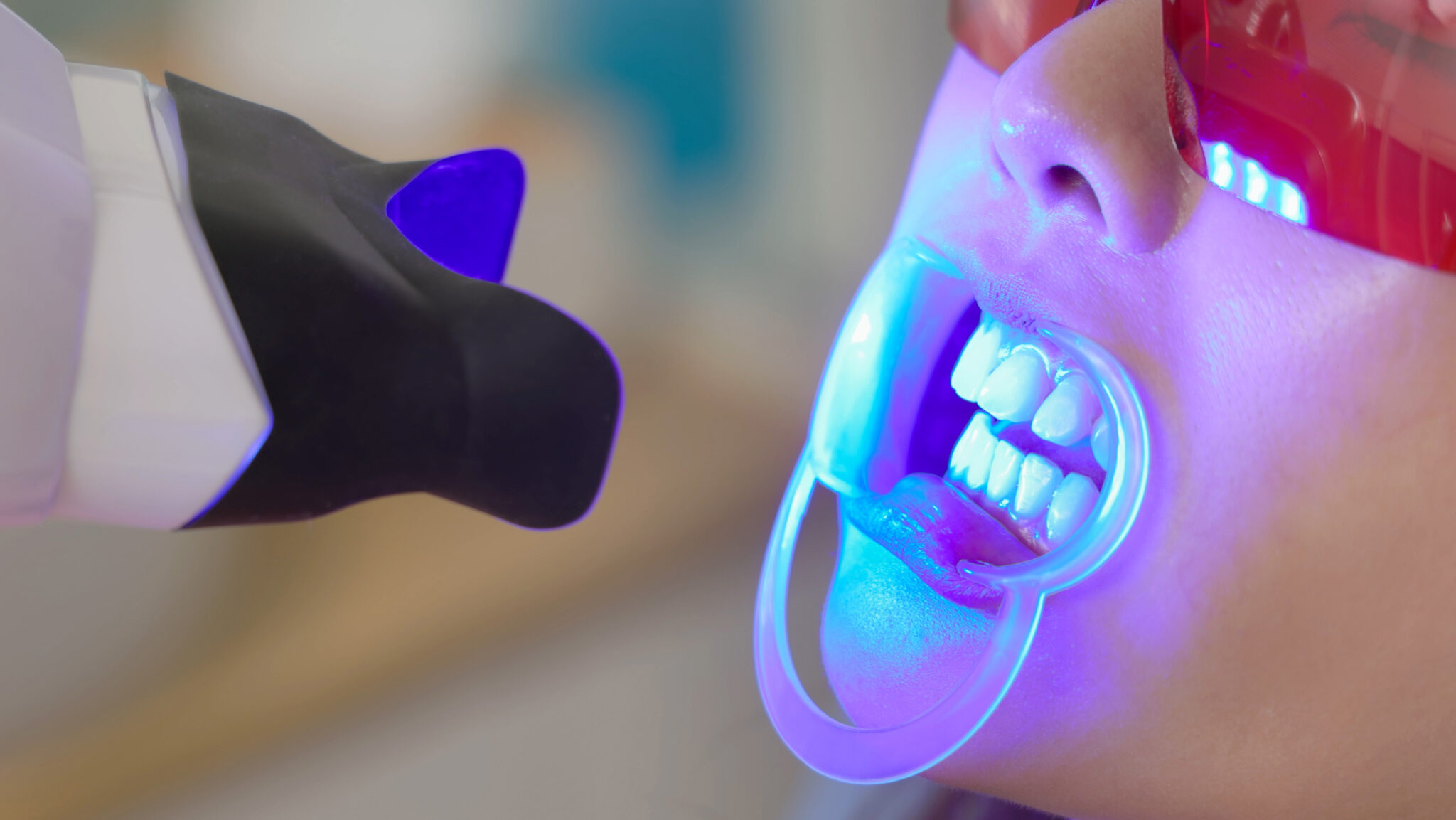
An investigation by the British Broadcasting Corporation (BBC) — including one reporter who obtained a fraudulent teeth-whitening qualification — has revealed serious breaches in the regulation of teeth-whitening services in the United Kingdom.
Investigators found bleaching gels offered on social-media platforms and delivered in car parks or to doorsteps, some containing hydrogen-peroxide concentrations of up to 53 per cent — far above legal limits.
Under U.K. regulation, only dental professionals registered with the General Dental Council (GDC) may administer whitening products containing more than 0.1 per cent hydrogen peroxide. In-office treatments provided by dentists are restricted to a maximum of 6 per cent hydrogen peroxide. The BBC investigation reported gel concentrations of up to 53 per cent.
The British Dental Association (BDA) called the findings “appalling.” The association warned that unregulated whitening can burn or damage gums and teeth. In one case cited by the BBC, a woman said she lost four teeth after a £65 (about C$115) whitening session at a beauty salon.
Related: Florida fake dentist arrested for ‘super glue’ veneers
Related: Czech police detain ‘fake dentist’ family who learned procedures online
Teeth-whitening market context
Teeth-whitening treatments are seeing rising demand globally.
According to Grand View Research, the global market for teeth-whitening products was valued at roughly US$6.9 billion in 2021 and is projected to reach about US$10.6 billion by 2030, with a compound annual growth rate (CAGR) of about 5.0 per cent from 2022 to 2030. A more recent Grand View estimate places the 2023 market at US$7.58 billion, rising to US$10.68 billion by 2030, maintaining the same CAGR of 5.0 per cent.
In North America, the market is expected to grow from about US$2.88 billion in 2023 to US$4.15 billion by 2030, with a 5.4 per cent CAGR, driven by increased consumer focus on aesthetics and new whitening technologies.
Related: Police: Unlicensed ‘dentist’ arrested in New York after patients suffer injuries
Another research firm, Fortune Business Insights, noted that the pandemic led to a heightened focus on self-care and personal grooming, boosting demand for at-home whitening products. For instance, the British Dental Association’s 2020 report, “Oral Care During the Pandemic,” found sales of at-home kits for dental fillings and crowns in the U.K. surged by nearly 87 per cent.
In Canada, the Royal College of Dental Surgeons of Ontario (RCDSO) classifies whitening agents as cosmetics unless they contain fluoride. While there is no specific prohibition on sales, Health Canada requires labelling for formulations containing more than 3 per cent hydrogen peroxide or 10 per cent carbamide peroxide.
link
More Stories
Dental Services Market: Cosmetic Dentistry Demand, Smile Makeovers & Market Forecast
In HelloNation, Dental Expert Dr. Mark Luvisotto of Windsor, ON, Explains Services Covered Under the Canadian Dental Care Plan
Press Release: Durbin Announces $3.5 Million Federal Funding for Parkland College Dental Education Program